Team


Product 1
 Gestalk
 is an AI-powered assistive communication solution for deaf and mute individuals. It converts hand gestures and Indian Sign Language into voice, text, and images in real time. A dedicated mobile application enables two-way communication by converting spoken language into text, making everyday communication more accessible, independent, and inclusive.
Sector
Electronics and Communication
Industry
Manufacturing
Model
B2C
B2B
B2G
Technology
Robotics
AI / ML
Internet of Things (IoT)
Gestalk
Gestalk is an AI-powered assistive communication solution for deaf and mute individuals. It converts hand gestures and Indian Sign Language into voice, text, and images in real time. A dedicated mobile application enables two-way communication by converting spoken language into text, making everyday communication more accessible, independent, and inclusive.
Sector
Electronics and Communication
Industry
Manufacturing
Model
B2C
B2B
B2G
Technology
Robotics
AI / ML
Internet of Things (IoT)
Gestalk is an AI-powered wearable assistive communication solution designed to bridge the communication gap between deaf, mute, and hearing individuals. The product combines wearable technology, Artificial Intelligence, and a dedicated mobile application to enable seamless two-way communication.
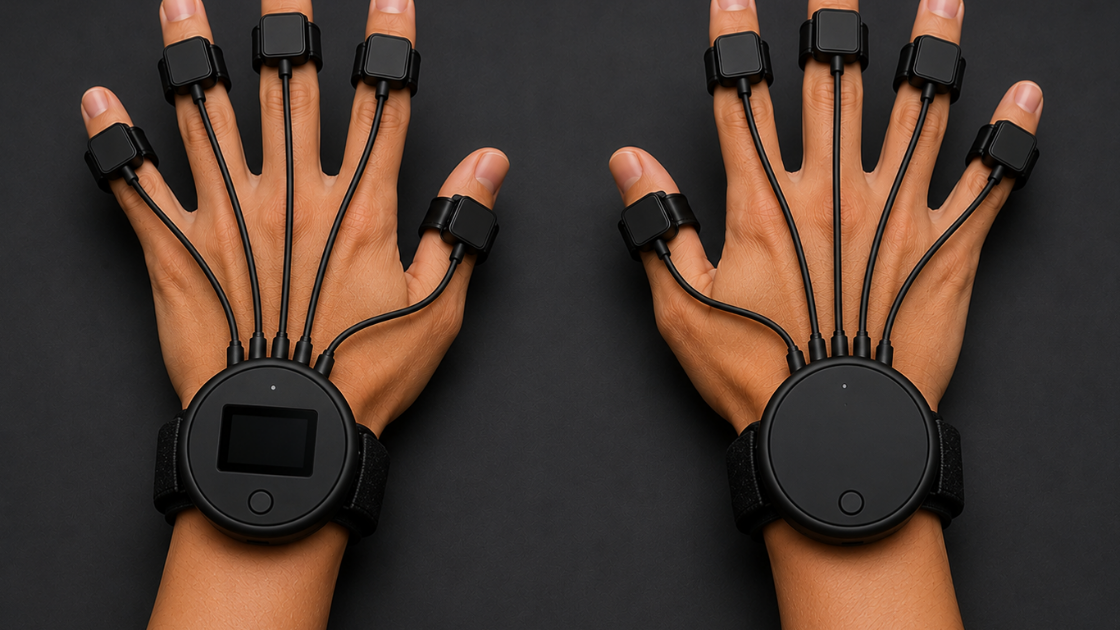
The Gestalk wearable device consists of five smart rings with motion-sensing technology connected to a compact wrist enclosure. The device captures hand and finger movements and wirelessly transmits the data to the dedicated Gestalk mobile application. An AI-based gesture recognition system processes the data and converts Indian Sign Language and predefined hand gestures into voice, text, and images in real time. The system supports 22 Indian regional languages, helping users communicate beyond language barriers.
Gestalk provides two-way communication through its dedicated mobile application. The gestures of deaf and mute users are converted into voice and text for hearing individuals, while spoken communication from hearing individuals is converted into readable text for deaf and mute users. This creates an accessible communication platform without requiring the hearing individual to understand sign language.
The primary target market includes deaf and mute individuals, special schools, educational institutions, hospitals, rehabilitation centres, NGOs, government organisations, and workplaces focused on accessibility and inclusion. The product also has potential applications in sign language learning and training, healthcare communication, customer service, public service centres, and other environments where communication accessibility is essential.
The core technologies behind Gestalk include wearable technology, motion sensing, wireless communication, Artificial Intelligence, Machine Learning-based gesture recognition, and mobile application development.
By combining AI-powered gesture recognition, multilingual support, wearable technology, and two-way communication in a single platform, Gestalk aims to make communication more accessible, independent, and inclusive. The solution has the potential to improve everyday communication, education, employment opportunities, healthcare access, and social participation for deaf and mute communities.